The Great December Shuffle: Fitting a Christmas Tree Around Your Sofa
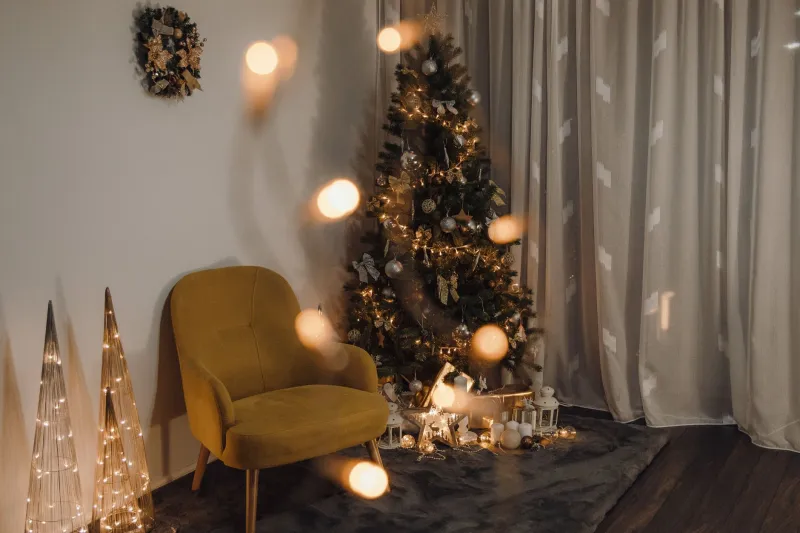
Every December, the same thing happens in living rooms across the UK. A tree comes through the door, the sofa gets shifted six inches to the left, and suddenly the room feels like a different place. Sometimes that’s a good thing. Sometimes you spend the whole of Advent climbing around a footstool to reach the light switch.
The aim here isn’t a magazine-perfect festive room. It’s a layout that makes space for the tree while keeping the sofa usable, the radiator clear and the walk to the kitchen reasonably dignified. Get that right and December feels easier. Get it wrong and you’ll be counting down to Twelfth Night for all the wrong reasons.
Start with the tree’s real footprint
A Christmas tree is never just the width of its stand. Branches spread, presents creep outwards and a tree skirt can add another few inches in every direction. Before you move a single cushion, clear a patch of floor and mark the tree’s likely footprint with masking tape.
Include the stand, the lowest branches and a little breathing room for watering or reaching the lights. If you’re using a real tree, remember that it will need access for a watering can without you crawling under the branches in your dressing gown. If it’s artificial, think about where the box will live for the rest of the month.
This tape outline is also a useful reality check. A tree that looked modest in the garden centre can suddenly seem enormous in a terraced living room. Better to discover that now than after you’ve shoved the sofa against the radiator.
Sockets, cables and the bit everyone forgets
Tree lights need power, and that single fact can decide the whole layout. Find the nearest socket before you commit. If the only sensible socket sits behind the sofa, you have three options: move the sofa slightly forward, use a properly rated extension lead routed safely, or choose a different tree position.
What you shouldn’t do is run a cable across a main walkway or under a rug where it can overheat or get damaged. A trailing lead across the room is a trip hazard, especially with guests, children or pets. Cable covers can help, but they don’t make a bad route good.
Also think about how you’ll switch the lights on and off. If the socket is hidden behind the tree, a timer plug can save a lot of awkward stretching. If you’re using a real tree, keep water away from cables and sockets. This is not the moment for improvisation.
Keep a walkway that actually works
A festive layout often fails because it treats the room as a display rather than a place to live. You still need to walk from the door to the sofa, from the sofa to the kitchen, and from the sofa to the radiator controls or window. You also need a route that works in the dark, with a cup of tea in hand.
As a rough guide, aim for at least 60–70cm of clear walking space on main routes. More is better. If you have to turn sideways or move a footstool every time you leave the room, the layout is already asking too much.
Watch door swings, too. A sofa pushed closer to the tree can easily block a living room door or make the room feel tighter than it is. And if you have a through lounge, keep the route between the front and back of the room obvious. Christmas clutter has a way of multiplying once cards, crackers and wrapping paper arrive.
Don’t park the sofa in front of the radiator
This is a classic December mistake. The tree takes the only free corner, so the sofa gets nudged in front of the radiator. The room looks fine until someone sits down and either gets a cold back or blocks the heat from reaching the rest of the space.
Radiators need clearance to work properly, and sofas need breathing room to avoid trapping warm, stale air. A real tree placed too close to a radiator will also dry out faster, drop needles sooner and generally look sorry for itself by Christmas Eve. Keep both the tree and the sofa a sensible distance away.
If your room is short on wall space, consider a smaller tree, a corner tree or a slim pencil tree rather than sacrificing the room’s heating and comfort for a fortnight.
Make the temporary sofa move a proper test
Sometimes the best festive layout is a temporary one. Pull the sofa forward, angle it slightly, swap it with an armchair or move a side table into the hall. That’s fine, as long as you test it before Christmas week.
Live with the new arrangement for a few days. Sit in your usual spot. Check the TV sightline. See whether the room still feels balanced when the tree lights are off. Move a cup of tea from the kitchen to the sofa and notice whether you’re dodging furniture. If the layout only works because the tree is filling a gap, it may not be worth keeping.
Use furniture sliders if you’re moving a heavy sofa on hard flooring, and ask someone to help rather than dragging it alone. Protect wooden floors and avoid pushing a sofa over cables or rug edges.
Decide what stays after January
Not every December rearrangement needs to be undone. Sometimes the tree forces a better layout: the sofa comes away from the wall, the room feels more sociable, and the radiator finally gets a clear run. If that happens, keep it.
If the new layout only makes sense with a six-foot tree in the corner, mark the original sofa position with tape before you move it back. Come January, you can reset the room without trying to remember where everything used to sit.
A good festive layout is one you barely notice after the first week. The tree looks good, the sofa still works and nobody has to limbo past the coffee table to reach the telly. That’s the December shuffle worth doing.