Chasing the Light: Picking a Sofa Colour for a Room That Never Sees the Sun
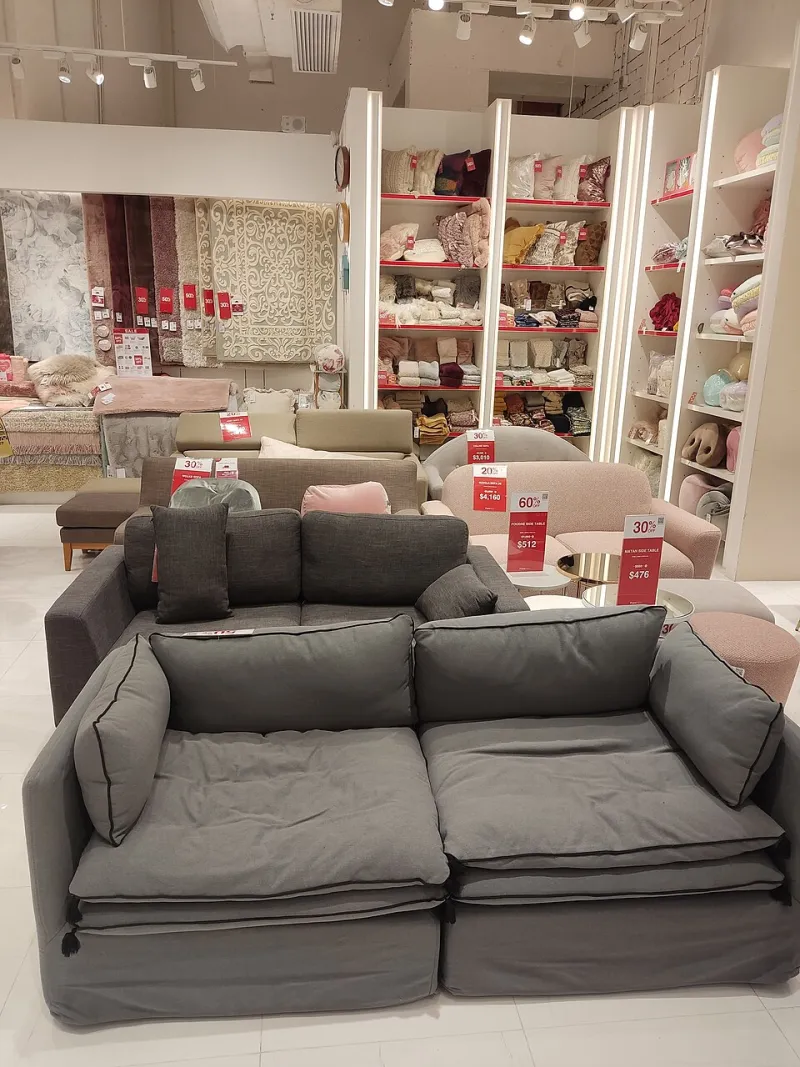
Photo: CAHOGNSUIE 202 KADPA, CC BY-SA 4.0, via Wikimedia Commons
There is a particular kind of disappointment that arrives in a north-facing living room somewhere around four in the afternoon in November. You bought the sofa in September. It looked superb in the showroom under those hot little display spots, and for a few weeks you told anyone who'd listen that it was exactly the shade you wanted. Then the light drops, the room turns the colour of a wet pavement, and your new purchase goes a sort of flat, dusty, faintly green grey. Nothing has gone wrong. The room simply stopped flattering it.
North light is doing more than you think
Windows facing north almost never get direct sun. What comes through them is bounced, indirect daylight, and bounced daylight is cool. On the Kelvin scale it sits somewhere up around 6000 to 6500K, which is photographer-speak for a pale blue cast. Every surface in the room is being lit by that. Warm colours shrug it off. Cool colours double down on it.
Add the architecture on top. The back reception room of a Victorian terrace. The north side of a 1930s semi. The front room of a new-build facing a shared drive. These are usually the rooms where the good sofa goes, and usually the rooms that get the least help from the sky.
Undertones matter far more than the colour name
Two sofas can both be labelled grey and behave completely differently at dusk. What separates them is the undertone.
Look for warm undertones: greige, taupe, stone, oatmeal, anything with a hint of yellow or red in the mix. Under cool light these stay readable and stop the room feeling like a dental waiting area. Cool greys with a blue or violet undertone will look bluer and flatter as the afternoon wears on, which is lovely if that's the effect you want and mildly depressing if it isn't.
Green undertones are the tricky ones. In bright midday light they look sophisticated and expensive. By late afternoon in a north room they can go the colour of a hospital corridor.
Mid-depths are generally the safest bet. Very pale greys bounce light around but lose all their depth once the sun drops, and very dark sofas can turn a dim corner into a black hole. A mid-tone warm stone or oatmeal reads well at both ends of the day, which is more than most of us manage.
The finish changes the reading as much as the dye
Same colour, different pile, different room.
Flat matte weaves absorb light and go quiet in the afternoon. That's restful if you want calm, less helpful if you want the sofa to feel like a feature. Velvets are the opposite: the pile catches light directionally, so the seat looks lighter than the back, the arms glow, and the whole thing shifts through the day. In a north room that is genuinely useful, because it manufactures some of the contrast the daylight isn't providing. Polyester velvets handle the shift better than cotton ones, which can look chalky in cool light.
Bouclé scatters light across its loops and reads soft and bright even on a grim day, though it can also look a bit shapeless — texture without depth. Leather with a slight sheen picks up highlights and reflections, which helps a lot. A very matte pale grey aniline leather, by contrast, can look almost like paper in a north-facing room.
Worth a close look at this point: budget performance weaves. Some cheaper polyester mixes have a faint sheen that reads slightly synthetic under cool indirect light. Noticeable in a still room, much less so once the lamps are on.
Test the swatch like you actually mean it
Order the free cuttings. Most UK retailers will send them, and the ones that charge usually refund against an order. Then do this properly:
- Tape the sample to the arm of your current sofa, or hold it at the height the new one will sit. Not against the wall, not on the windowsill, and definitely not in the kitchen where the light is completely different.
- Look at it at several points on the same day: mid-morning, early afternoon, four o'clock, and again once the lamps are on.
- Repeat on an overcast day as well as a bright one. Grey weeks are the majority of the year here, so test for the majority of the year.
- Photograph it if you like, but don't trust the picture. Phone cameras auto-correct white balance, which means they will silently warm up a blue cast and make the swatch look better than it is.
- Compare the sample with the wall behind it and the floor beneath it. A sofa doesn't exist on its own.
Check the bulbs before you blame the sofa
If the room feels wrong after dark, the lighting is often the culprit rather than the upholstery. Cool white LEDs, anything up around 4000K, will make a warm grey look beige and a cool grey look icy. Swapping the main bulb for something around 2700K is a fifteen-minute job and one of the cheapest fixes going.
Layer the light as well. A floor lamp in the far corner, a table lamp beside the sofa, a dimmable main light turned right down. Warm pools of light at eye level do more for a north-facing room than any amount of repainting.
Fixes that don't involve a paintbrush
If the sofa is already in and the corner looks grim by late afternoon:
- Warm the floor. A rug in rust, ochre or a warm red-based pattern stops the grey travelling up from the boards.
- Add two cushions in terracotta, mustard or brick. Two is enough. Five looks like a display.
- Drape a cream or camel throw over one arm so there's a warm block at sofa height.
- Swap cool metal for brass or aged bronze on the lamp or side table.
- Hang a mirror opposite or beside the window to push what light there is deeper into the room.
- Move a plant into the dead corner. Green foliage reads warm next to cool grey.
- Have a look at the art. A print full of ice blue is doing the room no favours at all.
None of this replaces choosing the right colour in the first place. But it's considerably cheaper than repainting a room in November, and it buys you time to work out whether the sofa is really the problem.