Before You Click 'Add Chaise': Mapping a Modular Sofa to Your Actual Wall

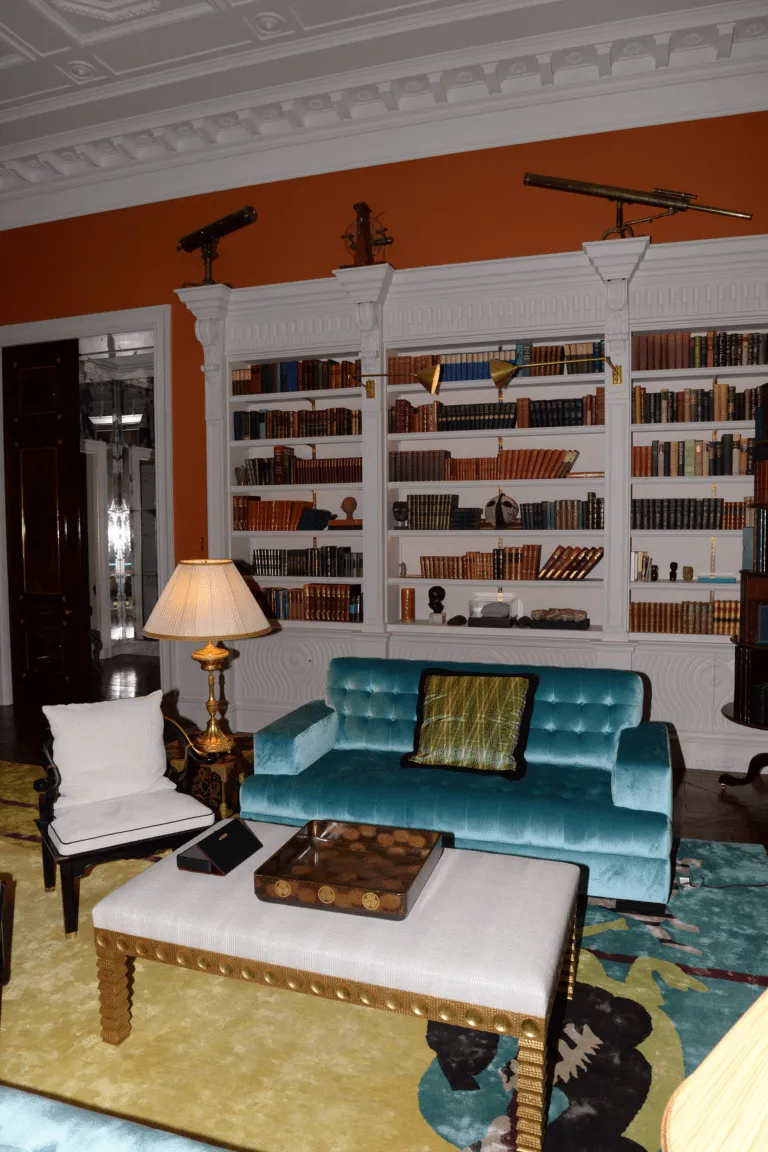
Photo: modular corner sofa with chaise in a UK living room, floor plan sketch and tape measure on coffee table, via pacificmod.ca
Modular sofas are sold like a pick-and-mix: choose a corner, add a chaise, tick an arm, decide on a foot colour. The bit that catches people out is not the fabric or the lead time. It is orientation. Specifically, which end the chaise, arm or corner module sits on. Get that wrong and the sofa that turns up can feel like a different piece of furniture entirely — and returning a made-to-order sofa is rarely as simple as popping it back in the post.
Why 'left' can mean two different things
Walk into a sofa showroom and ask for a left-hand chaise. One salesperson will mean the chaise is on the left as you stand facing the sofa. Another will mean it is on the left as you sit on it. Both are using the same words. Only one matches the picture in your head.
Retailers often label modules from the factory's point of view, or from the front of the sofa, or from the sitter's perspective. Some use 'left-hand facing' and 'right-hand facing'; others talk about a 'left return' or a 'right corner'. Add arm modules into the mix and it gets muddier. A left arm on a sofa facing you is a right arm when you are sitting down. That is not a trick question. It is just two different viewpoints.
The fix is not to memorise every retailer's system. It is to create one reference point of your own and stick to it.
Start with your wall, not the product page
Before you open another configurator, draw your room. A rough rectangle on the back of an envelope is fine. Mark the wall where the sofa will sit, then add the fixed stuff: chimney breast, radiator, window, door swing, TV point, plug sockets, the spot where the floor lamp actually lives.
Now decide which end of the sofa needs to be open. If the chaise is going against the chimney breast, does it stick out into the walkway? If the sofa backs onto a radiator, can air still move? If the door opens towards the sofa, will the chaise block it?
Next, make a footprint with masking tape on the floor. Use the retailer's plan-view dimensions — overall width, depth, chaise length, arm width — and mark the rectangle. Put a sticky note on the end where you want the chaise. Stand in the doorway you use most and take a photo. That photo is now your reference. Not the product page. Not the label. Your room.
The three-point check
When you are ready to order, check the configuration three ways.
First, sit where you will actually sit. Imagine the sofa in place. Which side is the chaise on? Say it out loud: 'Chaise on my left when I am sitting down.'
Second, stand facing the sofa from the middle of the room. Which side is the chaise on now? It should be the opposite. If you said left while seated, it is right while facing. Write both down.
Third, look at the plan view. Ignore the photo of the sofa in a styled room. Find the technical drawing with the chaise shaded or labelled. Point to the side of the rectangle where the chaise sits. That is the only view that matters for the order.
If those three checks do not agree, stop. Do not click add to basket.
What to ask before you pay
A good salesperson will not mind these questions. A vague answer is useful information too.
Ask: 'When you say left-hand chaise, is that left as I face the sofa or left as I sit on it?'
Ask: 'Can you send me the plan-view drawing with the chaise, arms and corner module labelled, plus the module codes?'
Ask: 'Which end is the corner module, and does the price include the arm at the open end?'
Ask: 'Is the chaise fixed, or can it be swapped to the other side later?'
Ask: 'What is the last date I can change the configuration before it goes into production?'
Ask: 'If it arrives with the chaise on the wrong side, what is your returns policy for made-to-order items?'
That last one matters. Many made-to-order sofas are excluded from the usual 14-day change-of-mind right, or they carry a collection and restocking fee. Check the terms before you order, not after the van has gone.
Arms, corners and the bit nobody mentions
Arms are where simple mistakes become expensive. On a modular sofa, an arm module may be sold separately from the seat modules. If you order a left arm and a right arm, check which end each one sits on when the sofa is assembled. If one end is open — say, next to a chaise — you may not need an arm there at all.
Corner modules also have a direction. The longer back usually runs along one wall, while the shorter side returns into the room. Retailers call this a left-hand corner or right-hand corner, but again, the label depends on where you are standing. Use the plan view.
And check the connectors. Most modular ranges clip together, but some are handed. If you plan to rearrange the sofa later, ask whether the modules can be flipped or whether the connectors only work one way.
The five-minute tape test
Once you have the plan-view drawing, go back to your tape rectangle. Put a cushion or a dining chair where the chaise will be. Walk around it. Sit in the chair. Check the gap to the coffee table. Check whether you can reach the radiator valve. Check whether the chaise leaves enough room to open the door or pull out a cupboard.
Then ask someone else in the house to read the order confirmation aloud while you stand at the doorway. If they say 'left-hand chaise' and you point to the other side, you have found the problem before delivery. That is a much cheaper place to find it.
If you have already ordered
Ring or email the retailer straight away. Quote the order number and ask them to confirm, in writing, which side the chaise will be on when you are sitting on the sofa. Ask if the order can still be amended. If it has not gone into production, you may be able to change it. If it has, ask what the options are before delivery.
Do not assume the delivery team will know. They are delivering what is on the paperwork.
A calmer way to buy
A modular sofa should fit your room and your picture of it. The label is not the sofa. The plan view, the tape on the floor and a shared set of words are what keep the two aligned. If a retailer cannot show you a labelled drawing or answer the left-and-right question clearly, that is worth knowing before you spend a few thousand pounds.
Get the orientation right and the only thing you will have to return is the extra cushion you bought by mistake.