Give It Room: Sofa Clearances That Quietly Calm a UK Living Room

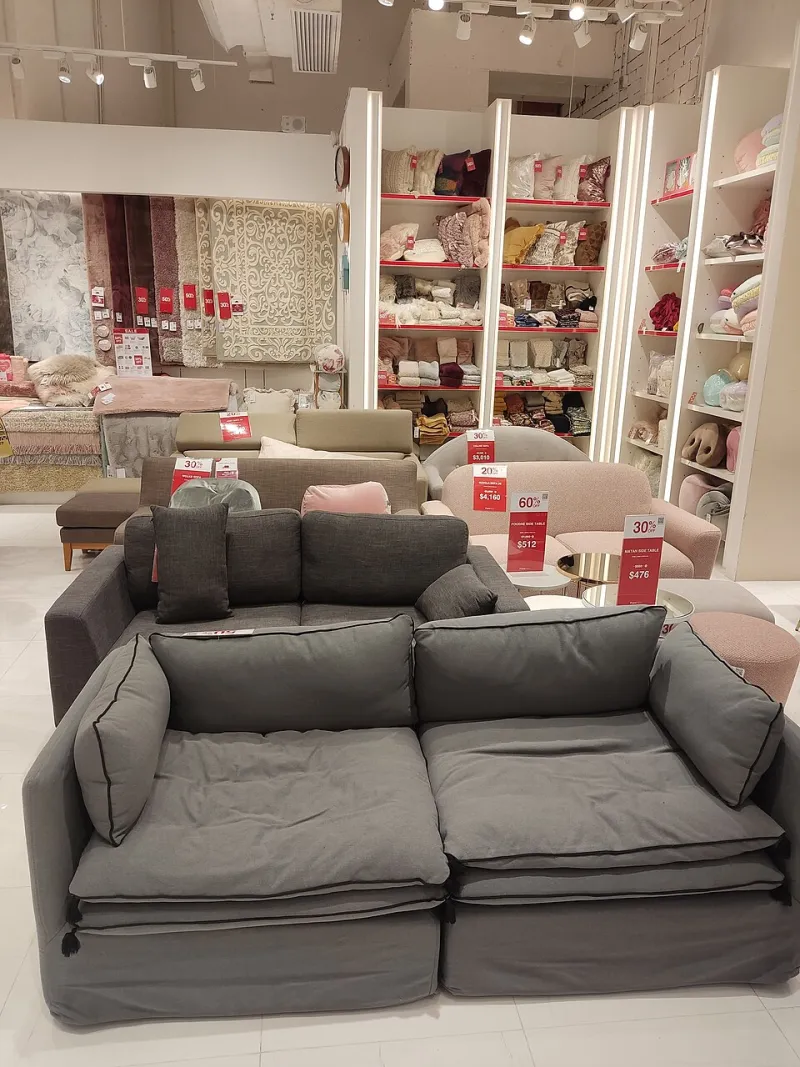
Photo: bright UK living room grey sofa with clear walkway and coffee table space, via as2.ftcdn.net
There's a moment, usually around 9pm on a Sunday, when you sit on the new sofa and something feels off. Not wrong exactly — just cramped. The fabric's lovely. The colour works. And yet you're shuffling sideways to get past the coffee table like a guest at a wedding buffet.
Nine times out of ten it isn't the sofa. It's the space around it.
We spend hours on swatches and minutes on clearances, which is a bit like agonising over a paint colour and then hanging the picture frame straight over the light switch. So let's talk about the gaps.
The 60cm rule, and where it comes from
Sixty centimetres is roughly the width of an adult's shoulders plus a bit of swing. It's the point at which two people can pass each other without turning sideways or doing that awkward half-twist.
In practice, 60cm is the gap you want between the front edge of your sofa and the coffee table, and between the sofa and any doorway or main route through the room. Below about 45cm, people stop walking in a straight line and start threading. Above 60cm, the room starts to feel generous rather than merely functional.
It's a rule of thumb, not a building regulation — nobody's coming to inspect. But it's a remarkably reliable one, and it costs nothing to check before the delivery van arrives.
Four gaps that actually matter
The walkway
Measure from the sofa's front edge to the nearest thing you'd bark your shin on. If you've got a 3.6m-wide terraced front room and a 2.2m three-seater, you're fine on paper — but only if the sofa sits on the long wall and the walkway isn't pinched by a side table, a lamp and someone's abandoned gym bag.
The radiator
This is the one most people ignore, and it's the one that causes the most quiet resentment in January. A sofa pressed flat against a radiator soaks up the heat that's meant for the room, and the fabric takes years of dry, dusty warmth it wasn't designed for.
Aim for 15–20cm of clearance where you can. If your radiator sits slap in the middle of the only sensible sofa wall — a very common layout in 1930s semis — consider a low, wide radiator, a vertical model in the corner, or simply accept that the sofa goes elsewhere and the telly moves instead.
The door swing
A standard UK internal door is 762mm wide, and it needs its full arc. Sofas placed in the swing zone are the single most common cause of "we'll just take the door off" — a solution that works, but which you should choose deliberately rather than discover at 6pm on moving day.
The sightline
If there's a telly, the sofa needs to face it without a crick in your neck. Roughly 2.5–3m works for a 50–55 inch screen; closer and you'll be watching pixels, further and you'll be squinting. Eye level should land around the middle of the screen, which often means the sofa sits a little further back than you'd first planned.
A quick measuring checklist
Before you commit, walk the room with a tape and a roll of masking tape:
- Mark the sofa footprint on the floor with tape. Stand in the room and look at it for a day before buying.
- Measure the walkway from the front edge to the coffee table, and from the arm to the nearest wall.
- Check the radiator gap — 15–20cm minimum if the radiator stays in use.
- Open every door fully, including any you rarely close.
- Measure the TV distance from where heads will actually be, not where feet will be.
- Account for the coffee table's real size, not the one you'd like to own.
- Check the rug: front feet on, back feet off is the classic, and it needs 40–50cm of rug in front of the sofa.
When the room is genuinely tight
Small UK living rooms — the 3.0 x 4.5m new-build lounge, the front room of a Victorian terrace with the chimney breast eating into one wall — don't need fewer sofas so much as smarter ones.
Slim arms, not slim seats. Ten centimetres saved on each arm is twenty centimetres of walkway. Deep, puffy arms are lovely and greedy.
Skip the chaise unless the corner it fills is genuinely dead space. A chaise sticks out into the room like a foot in an aisle.
Float, don't flush. Pulling a sofa even 10cm off the wall reduces its visual bulk and, in a room with a radiator behind it, buys you a little breathing room.
Go round on the coffee table. Ovals and circles let people slide past where rectangles make them stop.
Move the telly to the wall. A wall-mounted screen frees the floor where the media unit was, which is often exactly where the walkway wanted to be.
The bit nobody tells you
A calm room isn't one with beautiful things in it. It's one where nothing requires negotiation. You walk in, you sit down, you get up, you leave — no side-stepping, no shin-bruising, no leaning over the arm to reach the radiator valve.
Get the 60 centimetres right and the rest of the room quietly falls into line. It's the cheapest upgrade in the whole grey-cornered business of making a home feel sorted.