The Bay Window Isn’t a Dead Zone: Sofa Choices That Make It Earn Its Keep
Bay windows have a way of making a living room feel more generous than its floor plan deserves. They add light, a bit of architectural drama and that pleasant sense of being able to watch the street without pressing your nose to the glass. They are also, unfortunately, shaped like a furniture trap. Put the wrong sofa in one and you either block the best light in the house or create a dim, dusty pocket that nobody wants to sit in.
The good news is that there isn’t one correct answer. A Victorian canted bay, an Edwardian curve and a modern angled bay all ask for different things. What matters is choosing a sofa that respects the shape of the space, leaves room for curtains and radiators, and still feels like somewhere you’d actually put your feet up. Here’s how to work it out without turning the bay into a no-man’s-land.
Start With the Shape, Not the Sofa
A bay window is rarely a simple rectangle. In older UK homes, you’ll often find a canted bay with angled sides and a flat central window, or a more gradual curved bay that sweeps across the front of the room. Newer builds sometimes have sharper angled bays that look neat from outside but are surprisingly awkward inside. Before you fall for a sofa online, get down on the floor with a tape measure and a notebook.
Measure the width of the back wall, the width across the widest opening, the depth from the back wall to the inner edge of the bay, and the depth at each side. Note the height of the window sill, the position of any radiator, the depth of the curtain track or poles, and where the skirting boards sit. If the bay has a low sill, a sofa with a tall back will cut across the glass. If there’s a radiator under the window, a heavy sofa pressed against it will trap heat and make the corner uncomfortable.
A useful trick is to make a cardboard template of the sofa’s footprint and slide it around the bay. Painter’s tape on the floor works too. It feels fussy for about five minutes and then saves you from a very expensive mistake. Remember that sofa arms and legs often add width beyond the seat measurements, and delivery routes matter as much as the final position. If it barely fits through the door, it doesn’t matter how neatly it follows the curve.
The Three Main Contenders
A curved sofa is the obvious romantic choice for a rounded bay. It can follow the sweep of the window beautifully and make the space feel intentional rather than leftover. The catch is that curves are less forgiving than they look. Check the radius against your bay, not just the overall width. A sofa that curves too tightly will leave odd gaps at the ends; one that curves too gently will jut into the room. Curved models can also be surprisingly deep, so measure the walkway in front of them. If you have a small bay and a busy doorway nearby, a full curve may be more statement than useful.
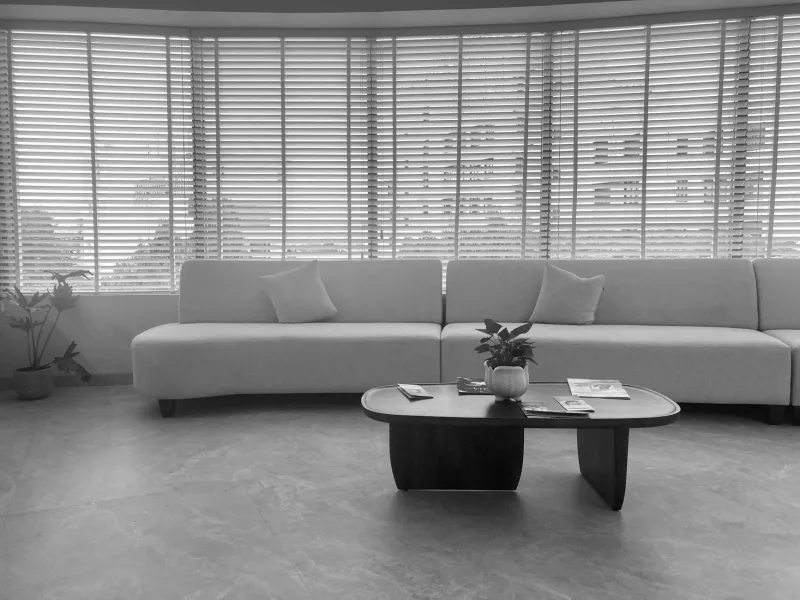
A low-back bench or window seat is the quiet problem-solver. Because it sits below the glass, it keeps the light flowing and makes the bay feel like a proper part of the room rather than a blocked-off alcove. It’s ideal for reading, perching with a coffee or giving guests somewhere to land at a party. The trade-off is comfort: a bench is not a slouchy evening sofa. Look for a decent seat cushion, a backrest that supports you properly and, ideally, storage underneath so the space earns its keep. In a period home, a built-in bench can look as though it has always been there, but a freestanding low-back sofa is easier to move and less commitment if you rent.
A standard two-seater is the sensible middle ground. It’s easier to source, easier to rehome and usually easier on the budget. The trick is to place it with a little breathing room rather than wedging it into the bay’s furthest corner. A two-seater that sits slightly forward, with its back to the window and a narrow gap behind it, can work well in a deeper bay. Just avoid a tall, solid-backed model that turns the window into a backdrop for the sofa’s upholstery rather than a source of light.
Keep the Light Moving
A bay window is only as good as the light it lets in. Bulky furniture, dark fabrics and heavy curtains can swallow that advantage. If you want to sit in the bay, favour sofas with low backs, visible legs and arms that don’t rise too high. A leggy frame lets light pass underneath and makes the floor feel larger. Pale or mid-tone upholstery will reflect more light than a deep navy or forest green, though practicality always matters in a room where people eat toast and drink tea.
Curtains deserve a rethink too. Full-length curtains that stack across the bay can make the whole area feel enclosed. Sheer curtains, Roman blinds or a track that follows the bay’s shape can keep the glass clearer. If radiators sit under the window, leave space for heat to rise and avoid sealing the sofa against them. A small side table, a slim floor lamp and a plant can make the nook feel used without cluttering the view.
Make It Useful, Not Merely Photogenic
The real test of a bay-window sofa is whether you’d choose to sit there on a grey Tuesday in November, not whether it looks good in a photograph. If the seat is awkward to reach, if the cushions are too deep for the space, or if the back of the sofa creates a dark gap you can’t vacuum, it will become the place where cushions go to retire. Keep access clear, choose removable covers if you can, and don’t fill every inch of the bay just because there is an inch to fill.
A bay window can be the softest, brightest corner of a UK living room. It just needs a sofa that understands the assignment: follow the shape where it helps, leave the glass alone where it doesn’t, and make the space comfortable enough to use every day.